
KiCad DC Power Integrity with KiPI
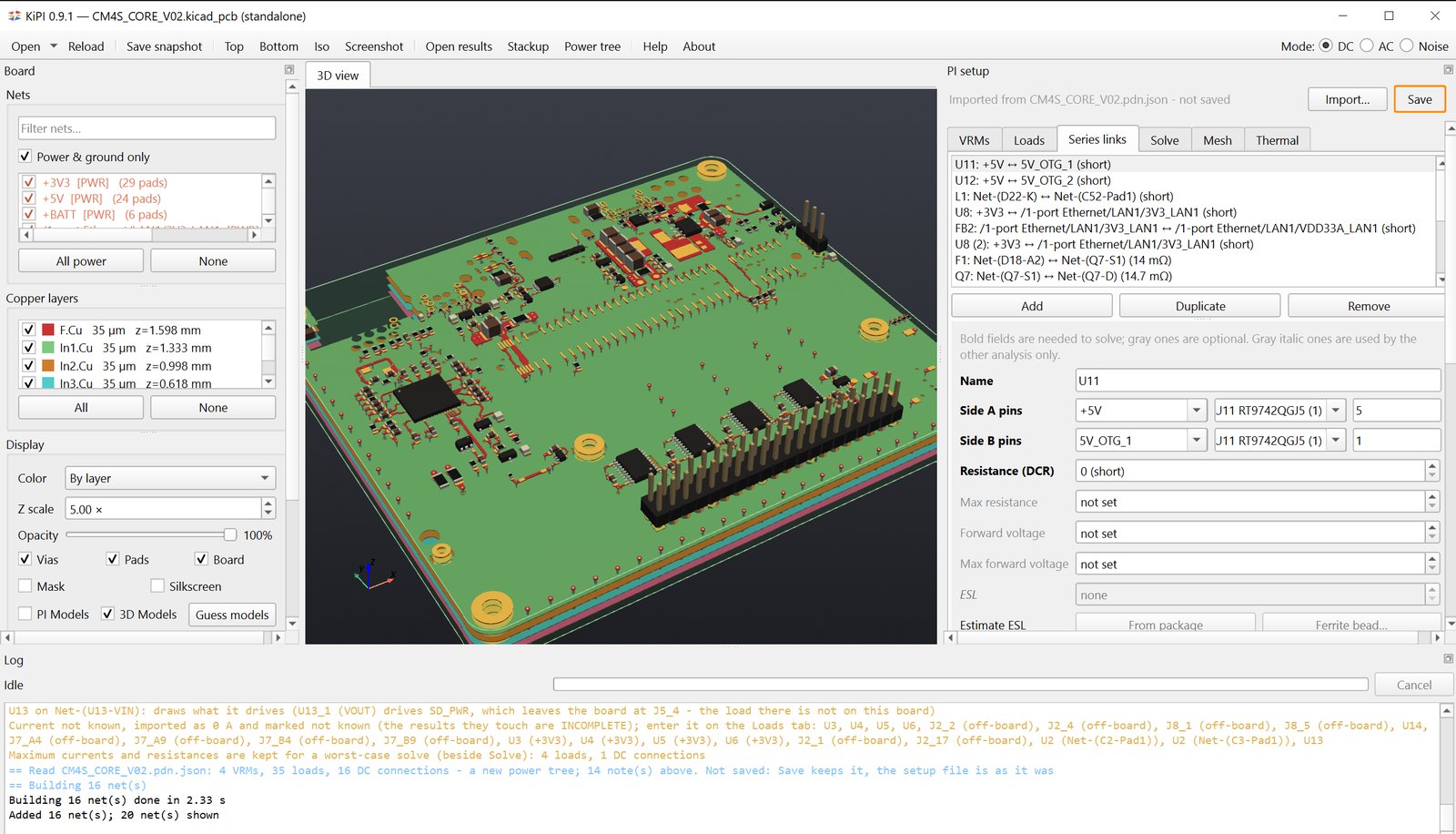
KiPI, by Drew Maatman, is an open-source power integrity analyzer that runs standalone or as a KiCad 9 and 10 plugin. It simulates DC voltage drop net by net across the copper layers, with PASS/FAIL checks and optional electro-thermal heating, and sweeps the PDN impedance over frequency against a target. We've built a fork of it on GitHub:
What the fork adds
- A pdn.json import: the power tree, the loads and the series resistances are filled in from the design's .pdn.json file instead of being entered by hand. Tomachie.com generates that file from the schematic and the component datasheets.
- Typical and worst-case DC solves, using each load's maximum current and each connection's maximum resistance.
- Loads whose current is not known are marked, so the results that depend on them read INCOMPLETE rather than PASS.
- Via plating rules, load heating in the thermal solve, and each load's minimum voltage.
- ODB++, KiCad 9 file and window fixes.
Now part of KiPI itself
The pdn.json import and the via plating rules were first written in our fork and are now part of KiPI 0.8.0, so the released KiPI reads a Tomachie-generated pdn.json directly. The other fixes are offered upstream as pull requests.
KiPI is open source under GPL-3. Feedback welcome.
Using Altium? See FYPA, the Altium DC power integrity tool we extended the same way